
Cattle Panel Greenhouse Plans: A Comprehensive Guide
Discover readily available PDF resources and printable plans for constructing robust cattle panel greenhouses, streamlining your build with detailed diagrams and material lists.
Cattle panel greenhouses represent an increasingly popular and economical solution for gardeners and growers seeking to extend their growing seasons. These structures utilize readily available, galvanized steel cattle panels to create a durable and surprisingly effective framework. The appeal lies in their affordability, ease of construction, and adaptability to various sizes and configurations.
PDF plans are instrumental in simplifying the building process, offering step-by-step instructions, material lists, and visual aids; These plans often detail various designs, from simple hoop houses to more elaborate structures. Utilizing cattle panel greenhouse plans allows even novice builders to create a functional and protective environment for plants, offering a cost-effective alternative to traditional greenhouse materials like wood or aluminum.
Benefits of Using Cattle Panels for Greenhouse Construction
Cattle panels offer a unique blend of strength, affordability, and accessibility for greenhouse construction. Their galvanized steel construction provides excellent durability and resistance to the elements, ensuring a long-lasting structure. Compared to traditional materials, cattle panels significantly reduce building costs, making greenhouse gardening more attainable.
PDF plans specifically designed for cattle panel greenhouses highlight the ease of assembly, often requiring minimal welding or specialized tools. The inherent flexibility of the panels allows for curved designs, maximizing sunlight exposure and space utilization. Accessing detailed PDF guides ensures proper construction techniques, optimizing structural integrity and longevity, ultimately providing a robust and cost-effective growing environment.
Cost-Effective Greenhouse Solutions
Cattle panel greenhouses represent a remarkably budget-friendly alternative to conventional greenhouse structures. Utilizing readily available and relatively inexpensive materials, these greenhouses minimize upfront investment. PDF plans often detail sourcing options, like Tractor Supply, and lumber mills, further reducing expenses.
Detailed PDF guides frequently emphasize repurposing materials and simplifying construction techniques, lowering labor costs. The inherent strength of cattle panels reduces the need for extensive framing, saving on lumber and hardware. Accessing free or low-cost PDF resources empowers gardeners to build a functional and protective growing space without breaking the bank, making fresh produce more accessible.
Sourcing Cattle Panels: Where to Buy
Cattle panels, the core component, are commonly found at farm supply stores like Tractor Supply Co., frequently referenced in PDF greenhouse plans. Local livestock auctions and agricultural suppliers also offer competitive pricing. Online marketplaces, such as Craigslist or Facebook Marketplace, can yield used panels at significantly reduced costs.
PDF guides often suggest comparing prices across multiple vendors. Lumber for framing can be sourced from local lumber mills, potentially offering cost savings over big-box stores. Thoroughly reviewing PDF material lists helps determine precise quantities, minimizing waste and ensuring efficient purchasing. Consider delivery options, as panels can be bulky and heavy.
Essential Tools and Materials
PDF greenhouse plans detail a core toolkit: wire cutters for panel modification, a drill for securing frames, and a level for ensuring structural integrity. Essential materials include cattle panels (typically 16, as outlined in many PDF guides), lumber for base framing, and poly film for covering.
PDF resources emphasize the importance of heavy-duty staples or clips for attaching the poly film. Gloves and safety glasses are crucial for protection. A measuring tape, pencil, and potentially a post-hole digger (depending on foundation choice) complete the list. Reviewing a detailed PDF materials list before starting ensures you have everything needed.
Cattle Panel Specifications & Quantities
PDF plans consistently recommend 16, 5-foot cattle panels, sourced from suppliers like Tractor Supply, for a standard hoop house size. Panel gauge is crucial; heavier gauge panels offer superior strength. PDF guides often specify a minimum wire diameter for durability.
Panel length impacts greenhouse width, so verify dimensions before purchase. Many PDFs detail cutting panels for specific arch heights. Quantities vary with greenhouse length; longer structures require more panels. Ensure consistent panel specifications for uniform arch construction, as detailed in downloadable PDF blueprints. Proper panel selection, guided by PDF instructions, is vital for a stable structure.
Lumber Requirements for Framing
PDF greenhouse plans typically call for 2x12x10 rough-cut planks, obtainable from local lumber mills, for base frame construction. These plans emphasize pressure-treated lumber for ground contact, preventing rot. PDF guides detail lumber quantities based on greenhouse dimensions; larger structures necessitate more framing material.
Additional lumber may be needed for door frames and end wall supports, as outlined in detailed PDF schematics. Some PDFs suggest 2x4s for bracing, enhancing structural integrity. Always consult the PDF’s cut list to minimize waste. Accurate lumber measurements, per the PDF, ensure a square and stable greenhouse frame.
Covering Materials: Poly Film Options
PDF cattle panel greenhouse plans universally recommend polyethylene (poly) film for covering. PDF guides detail varying mil thicknesses; 6-mil film is standard, offering a balance of durability and cost. Heavier 8-mil film extends longevity, particularly in harsh climates, as detailed in some PDFs.
PDF resources often suggest UV-resistant poly film to prevent degradation from sunlight. Widths vary, but PDFs typically specify sufficient overlap for secure attachment. Infrared (IR) film, discussed in advanced PDFs, can retain heat. PDF instructions emphasize proper tensioning to minimize tearing, and securing the film with wiggle wire or tape.
Detailed Construction Plans: Step-by-Step
PDF cattle panel greenhouse plans begin with foundation preparation – leveling the ground and constructing a base frame, often from lumber. PDF guides then illustrate bending cattle panels into arches, securing them to the base. Detailed diagrams in PDFs show spacing and connection methods.
PDF instructions emphasize creating structural integrity by adding horizontal supports and bracing. Subsequent steps, outlined in PDFs, cover doorway framing and poly film installation. Many PDFs include checklists for materials and tools. Advanced PDFs detail anchoring techniques for wind resistance, ensuring a stable structure. Following these PDF steps yields a durable greenhouse.
Foundation Preparation & Base Frame Construction
PDF cattle panel greenhouse plans typically start with site selection and ground leveling. PDF guides detail clearing vegetation and ensuring a stable, flat surface. Base frame construction, as shown in PDFs, often utilizes pressure-treated lumber – 2×12 planks are common.
PDF diagrams illustrate cutting lumber to length and assembling a rectangular frame. Securely joining corners with screws or brackets is emphasized in PDF instructions. Some PDFs suggest burying the frame slightly for added stability. Accurate measurements, detailed in PDFs, are crucial for a square and level base. This solid foundation supports the arched cattle panel structure.
Assembling the Cattle Panel Arches
PDF cattle panel greenhouse plans demonstrate arch creation by bending panels into a semi-circular shape. PDF guides often recommend using a template or form to maintain consistent arch curvature. Spacing arches evenly – typically 4 to 6 feet apart – is detailed in PDF diagrams.
PDF instructions illustrate securing arches to the base frame using brackets, screws, or clamps. Maintaining equal spacing and alignment is crucial, as shown in PDF visuals. Some PDFs suggest temporary bracing during assembly for stability. Properly formed arches provide the greenhouse’s structural integrity, as highlighted in detailed PDF construction steps.
Securing the Arches and Creating Structural Integrity
PDF cattle panel greenhouse plans emphasize robust arch securing methods. PDF guides detail using metal brackets, U-bolts, or heavy-duty zip ties to connect arches to the base frame. Longitudinal purlins – often lumber or additional cattle panels – are shown in PDFs running along the arches’ length for added strength.
PDF diagrams illustrate diagonal bracing between arches to resist wind and snow loads. Proper anchoring of the base frame, detailed in PDF instructions, is vital for overall stability. PDF resources often recommend checking local building codes for structural requirements. A well-secured structure, as depicted in PDFs, ensures longevity and plant protection.
Greenhouse Dimensions and Size Variations
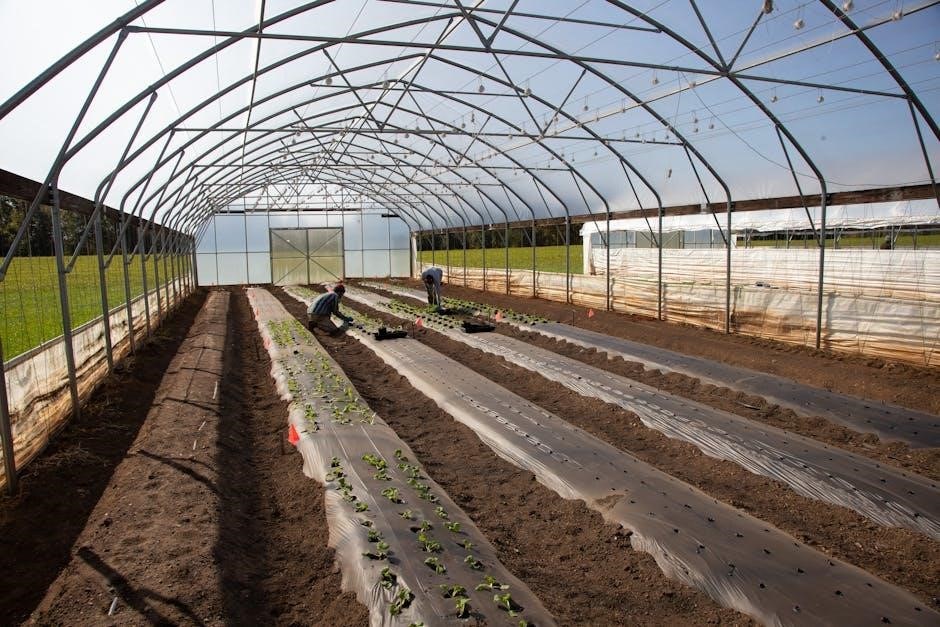
PDF cattle panel greenhouse plans showcase diverse dimensions, typically ranging from 8ft to 20ft in width and 12ft to 40ft in length. PDF guides often provide customizable designs, allowing adjustments based on available space and gardening needs. Height varies, generally between 6ft and 10ft at the peak.
PDF resources illustrate how arch spacing impacts structural integrity and usable growing area. Smaller variations, detailed in PDFs, suit limited spaces, while larger designs offer ample room. PDF plans frequently include scaled drawings for accurate visualization. Consider local weather conditions when choosing dimensions, as PDFs may offer reinforcement suggestions.
Ventilation Strategies for Cattle Panel Greenhouses
PDF cattle panel greenhouse plans emphasize the importance of ventilation for temperature and humidity control. PDF guides detail passive techniques like roll-up sides, utilizing poly film secured with clips, and strategically placed vents. These designs, found in PDFs, promote airflow without mechanical assistance.
For larger structures, PDF plans may incorporate active systems. These include exhaust fans, often powered by solar energy, detailed in accompanying PDF schematics. PDF resources illustrate fan placement for optimal circulation. Proper ventilation, as outlined in PDFs, prevents overheating and disease, crucial for plant health.
Passive Ventilation Techniques
PDF cattle panel greenhouse plans frequently showcase roll-up side walls as a primary passive ventilation method. These PDF guides detail securing poly film with clips or battens, allowing adjustable airflow. Another common technique, illustrated in PDF diagrams, involves strategically placed vents near the roof apex, facilitating hot air escape.
PDF resources also suggest utilizing doors and entryways for cross-ventilation. Careful placement, as shown in PDF layouts, maximizes airflow. These passive strategies, detailed in PDFs, minimize energy consumption while maintaining optimal greenhouse temperatures. Proper implementation, guided by PDF instructions, is vital for plant health and growth.
Active Ventilation Systems (Fans, etc.)
PDF cattle panel greenhouse plans often include sections on integrating active ventilation for enhanced climate control. These PDF guides detail fan sizing based on greenhouse volume, ensuring adequate air circulation. PDF resources illustrate fan placement – typically exhausting hot air from the roof and drawing in cooler air from lower vents.
Some PDF plans suggest automated fan systems controlled by thermostats, maintaining consistent temperatures. PDF diagrams showcase wiring schematics for these systems. Utilizing exhaust fans, as detailed in PDFs, is crucial during peak heat. Proper installation, guided by PDF instructions, optimizes efficiency and prevents condensation build-up.
Door and Entryway Design
PDF cattle panel greenhouse plans dedicate sections to entryway construction, emphasizing accessibility and weather sealing. These PDF guides often recommend a double-door system to minimize heat loss during entry and exit. PDF resources illustrate framing options using lumber compatible with the cattle panel structure.
Detailed PDF diagrams showcase hinge placement and latch mechanisms for secure closure. Some PDF plans include instructions for building a small entryway vestibule, creating an airlock effect. PDF guides also address ramp construction for wheelchair accessibility. Proper door sealing, as outlined in PDFs, prevents pest intrusion and maintains internal climate control.
Covering the Greenhouse: Poly Film Installation
PDF cattle panel greenhouse plans provide detailed instructions for poly film installation, crucial for climate control. These PDF guides specify appropriate poly film thickness (typically 6 mil) and UV resistance levels. PDF resources illustrate techniques for securely attaching the film to the cattle panel arches, often using wiggle wire and lock channel systems.
PDF diagrams demonstrate proper film tensioning to minimize sagging and wind damage. Some PDF plans suggest using two layers of poly film with an air gap for enhanced insulation. PDF guides also cover sealing seams and edges to prevent heat loss. Careful adherence to PDF instructions ensures a durable and effective greenhouse covering.
Anchoring and Stabilization Techniques
PDF cattle panel greenhouse plans emphasize robust anchoring for wind resistance. These PDF guides detail various methods, including ground posts driven deep into the earth, and concrete anchors for added stability. PDF resources illustrate securing the base frame to these anchors using brackets and hardware.
PDF diagrams often show diagonal bracing added to the structure for increased rigidity. Some PDF plans recommend burying the poly film edges to prevent wind uplift. PDF guides also suggest using tension cables or ropes tied to external stakes for extra support. Following PDF instructions diligently ensures your greenhouse withstands harsh weather conditions.
Common Issues and Troubleshooting
PDF cattle panel greenhouse plans often include a troubleshooting section. Common issues detailed in these PDF guides include wind damage, poly film tears, and structural instability. PDF resources advise reinforcing weak points with extra bracing or stronger anchors. Addressing wind resistance is a key focus in these PDF documents.
PDF plans offer solutions for poly film tears, like using repair tape or replacing damaged sections. PDF guides also address potential issues with the frame bending or warping, suggesting adjustments or reinforcements. Consulting the PDF for specific solutions related to your build is crucial for quick and effective repairs, ensuring longevity.
Dealing with Wind Resistance
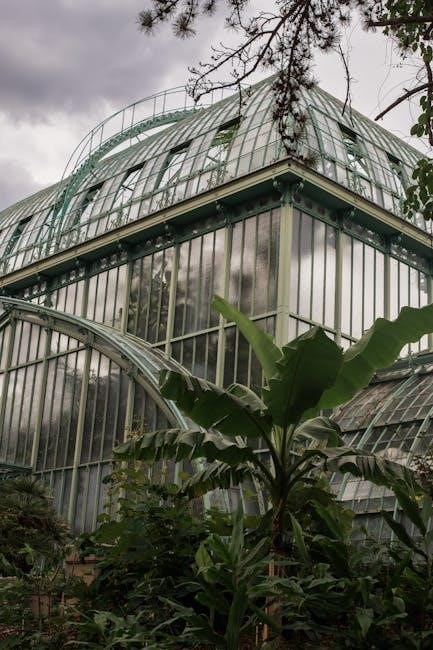
PDF cattle panel greenhouse plans emphasize robust anchoring as vital for wind resistance. These PDF guides detail various anchoring methods, including ground posts, concrete footings, and earth anchors, specifying appropriate depths and materials. PDF resources often recommend wind bracing – diagonal supports added to the frame – to enhance stability.
PDF plans may suggest streamlining the greenhouse shape to reduce wind load, or orienting it strategically relative to prevailing winds. Detailed PDF instructions cover securing the poly film tightly to minimize flapping and potential tearing. Consulting the PDF for your specific design is crucial for understanding recommended wind-resistant construction techniques.
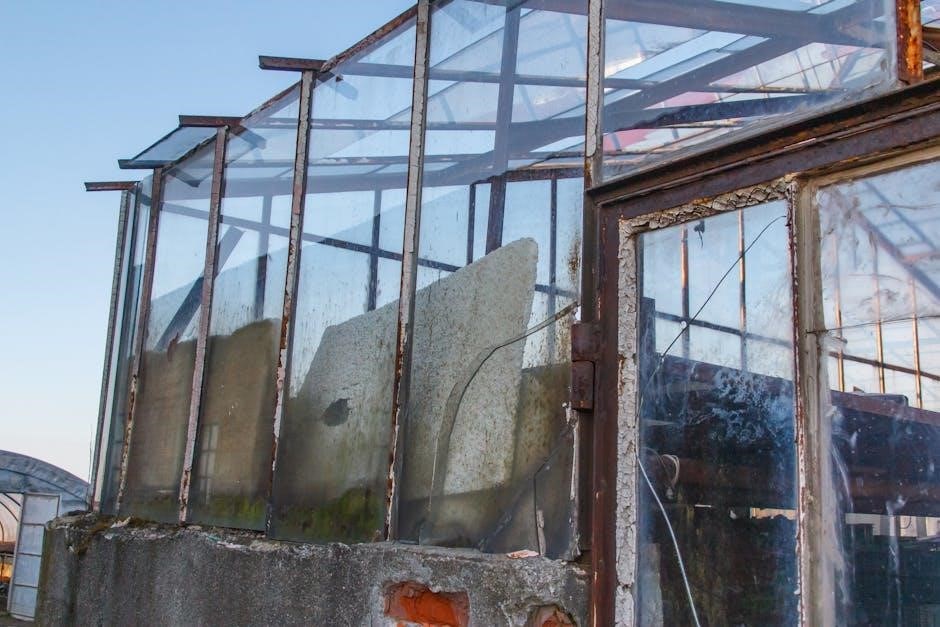
Preventing Poly Film Tears
PDF cattle panel greenhouse plans frequently address poly film vulnerabilities. These PDF guides recommend using UV-resistant poly film, specifically designed for greenhouse applications, to prolong its lifespan and prevent degradation. PDF resources detail proper film tensioning techniques, avoiding over-stretching which causes tears.
PDF plans often illustrate methods for securing the film – using wiggle wire, locking channels, or batten strips – to distribute stress evenly. Reinforcing corners and edges, as shown in PDF diagrams, is crucial. Regularly inspecting the film for small tears and promptly repairing them, guided by PDF instructions, prevents larger issues.
Modifications and Customizations
PDF cattle panel greenhouse plans often serve as a base for personalized modifications. Many PDF guides suggest adding shelving units constructed from lumber, detailed in material lists, to maximize vertical growing space. Integrating irrigation systems, with PDF-provided layouts, automates watering.
PDF resources showcase options for creating cold frames within the structure for seed starting. Customizations like adding a double-door entryway, illustrated in some PDF plans, improve accessibility. PDF guides also demonstrate how to incorporate shade cloth for temperature regulation. Remember to always prioritize structural integrity when modifying your greenhouse, referencing the original PDF plans.
Adding Shelving and Growing Beds
PDF cattle panel greenhouse plans frequently detail shelving construction using readily available lumber. These plans often include cut lists and assembly diagrams for tiered shelving units, maximizing vertical growing space within the arched structure. Some PDF guides suggest using reclaimed wood for cost-effectiveness.
PDF resources also illustrate building raised growing beds inside the greenhouse, improving drainage and soil control. Plans may specify dimensions and materials for constructing wooden frames. Consider referencing the PDF’s load-bearing recommendations before adding substantial weight. Properly secured shelving and beds, as shown in detailed PDF illustrations, enhance greenhouse functionality.
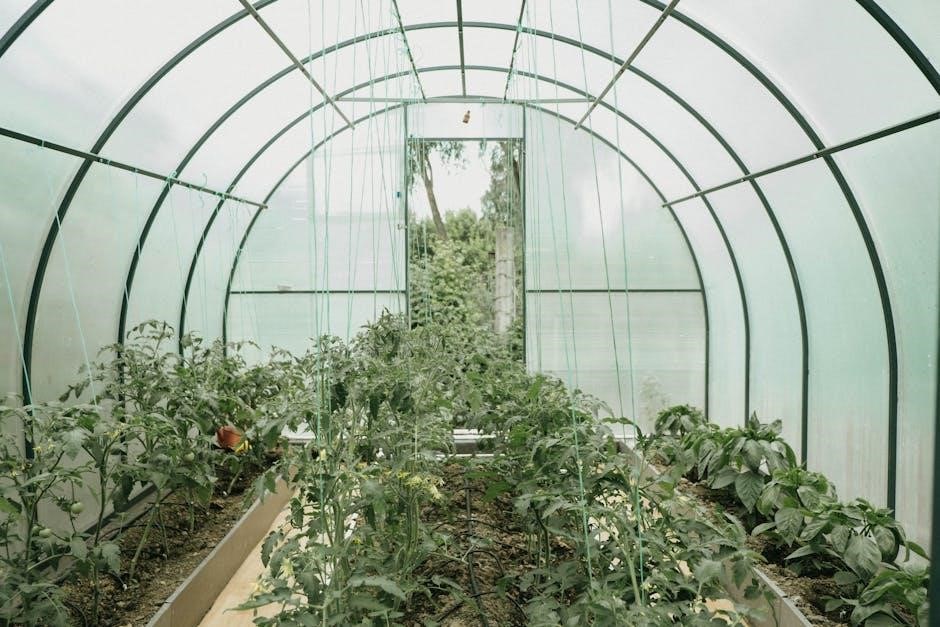
Integrating Irrigation Systems
PDF cattle panel greenhouse plans often include sections on integrating efficient irrigation. Many downloadable guides showcase drip irrigation systems, detailing tubing layouts and emitter placement for optimal water delivery. These PDF resources frequently recommend using timers and pressure regulators for automated watering schedules.
Detailed PDF diagrams illustrate connecting irrigation lines to a water source and distributing them throughout the greenhouse. Some plans suggest incorporating rainwater harvesting systems, with PDF schematics for collection and storage. Always consult the PDF’s recommendations regarding water pressure and compatibility with chosen irrigation components for a successful setup.
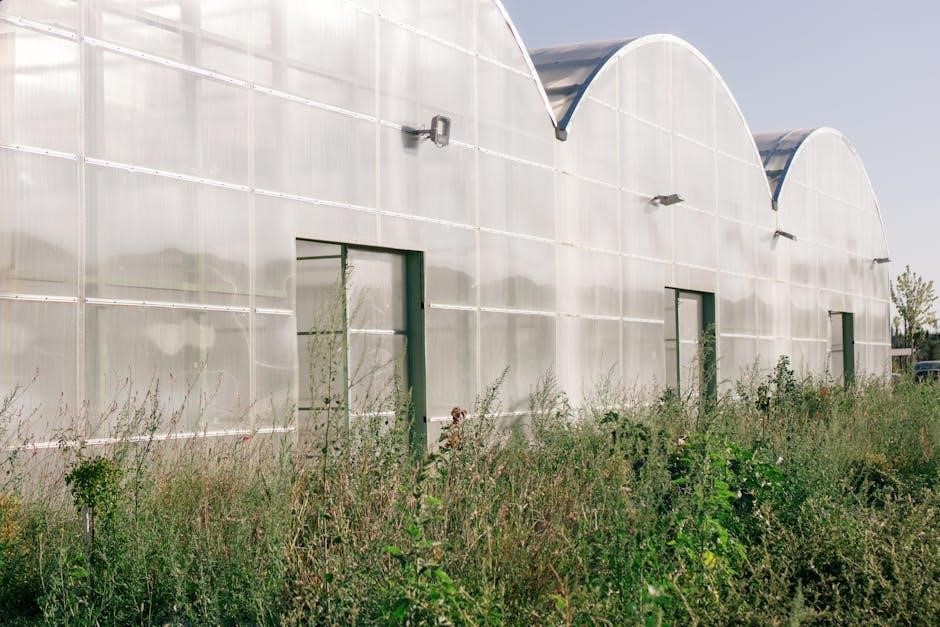
PDF Resources and Printable Plans
Numerous PDF resources offer comprehensive cattle panel greenhouse plans, ranging from simple hoop houses to more elaborate designs. These downloadable plans typically include detailed material lists, cutting diagrams, and step-by-step construction instructions. Searching online reveals various free and paid PDF options, catering to different skill levels and budgets.
Many PDF guides provide scaled drawings, facilitating accurate measurements and material procurement. Look for PDFs that specify cattle panel dimensions and lumber requirements. Printable plans allow for easy reference during construction, ensuring a streamlined building process. Remember to review multiple PDFs to compare designs and choose the plan best suited to your needs.
Maintenance and Longevity
Regular maintenance is crucial for maximizing the lifespan of your cattle panel greenhouse. Inspect the structure annually for rust, particularly on the cattle panels and connection points. Applying a rust-resistant coating can significantly extend the panels’ durability. Check the poly film covering for tears or punctures, promptly repairing any damage to prevent further deterioration.
Ensure the base frame remains stable and level, addressing any settling or shifting. Tighten bolts and screws periodically to maintain structural integrity. Proper ventilation, as outlined in the plans, prevents condensation buildup, reducing rust and extending the film’s life. Following the PDF plan’s guidance ensures a long-lasting, productive greenhouse.
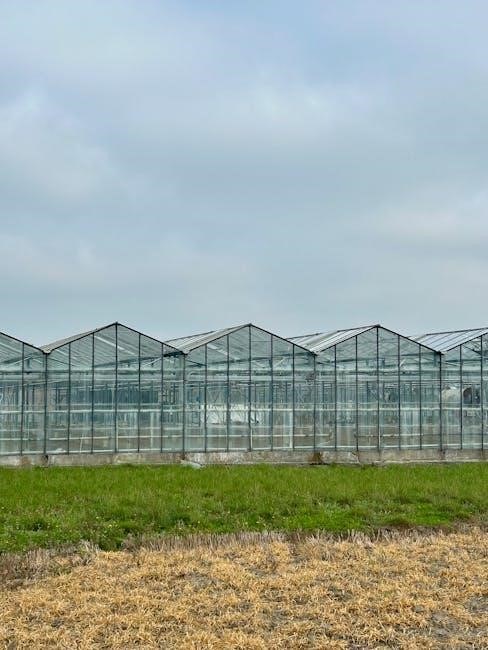
Building Your Cattle Panel Greenhouse
Constructing a cattle panel greenhouse offers a cost-effective and surprisingly durable solution for extending your growing season. Utilizing readily available PDF plans simplifies the process, providing clear instructions and material lists for a successful build. Remember to prioritize a solid foundation, secure arch assembly, and proper covering techniques for optimal results.
These greenhouses are adaptable, allowing for customizations like shelving and irrigation systems. Consistent maintenance, including rust prevention and film repairs, will ensure longevity. With careful planning and execution, guided by detailed PDF resources, you’ll enjoy years of bountiful harvests from your robust and affordable cattle panel greenhouse.